


![ChiltanPure Red Onion Oil Reduces Hair Fall & Accelerates Hair Regrowth [پیاز کا تیل] - product image 1](http://chiltanpure.pk/cdn/shop/files/Onion-Oil_640x.jpg?v=1707234520)
![ChiltanPure Red Onion Oil Reduces Hair Fall & Accelerates Hair Regrowth [پیاز کا تیل] - product image 2](http://chiltanpure.pk/cdn/shop/products/red-onion-oil-reduces-hair-fall-amp-accelerates-hair-regrowth-piaz-ka-til-trending-291868_640x.jpg?v=1707234520)


Best quality I want buy again insha'Allah
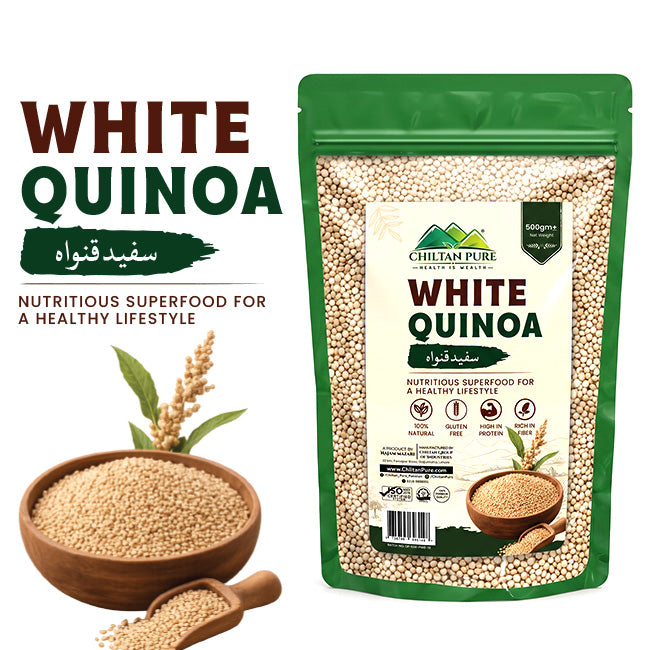
Quinoa - More Fiber, More Protein - The Better Grain for Every Meal - A Perfect Alternative to Rice*
DOWNLOAD our App & Get Amazing Discount
Download Now
|
Need More Discount ~ Chat with Sales Person! BARGAIN NOW
Quinoa - More Fiber, More Protein - The Better Grain for Every Meal - A Perfect Alternative to Rice is part of our food range, selected for customers looking for a practical option for the daily routine.
Use according to the product label and instructions. Follow the recommended quantity and frequency.
Quinoa - More Fiber, More Protein - The Better Grain for Every Meal - A Perfect Alternative to Rice rozana routine ke liye ek practical option hai. Isay product label ki hidayaat ke mutabiq istemal karein aur recommended quantity follow karein.
Related products ke liye food collection dekhein.
Is Quinoa - More Fiber, More Protein - The Better Grain for Every Meal - A Perfect Alternative to Rice available in Pakistan?
Current availability aur price product page par check karein.
How should I use it?
Packaging par di gayi instructions follow karein.
|
It is low in calories but rich in nutrients; quinoa helps to reduce cravings and promote a feeling of fullness, aiding in healthy weight loss.
|
|
Bring it to a boil, then reduce the heat to low and cover the pot.
Let it simmer for 15-20 minutes until the quinoa has absorbed the water and the grains appear soft and fluffy.
|
|
Use it in breakfast.
|
|
Use a fork to separate the grains.
Quinoa can be enjoyed in a variety of ways. Serve it as a substitute for rice, pair it with curries, or add it to salads, soups, or stews.
|
Overall rating: 5.0 / 5 from 3 reviews.
Best quality I want buy again insha'Allah
Nazia Saleem S. 5/5 Verified
Quinoa - More Fiber, More Protein - The Better Grain for Every Meal - A Perfect Alternative to Rice*
Very tasty
Asharib B. 5/5 Verified
Quinoa - More Fiber, More Protein - The Better Grain for Every Meal - A Perfect Alternative to Rice*
best products ever. all of them are delicious. love it.
Zainab A. 5/5 Verified
Quinoa - More Fiber, More Protein - The Better Grain for Every Meal - A Perfect Alternative to Rice*
Thanks for subscribing!
This email has been registered!