


![Red Onion Oil Reduces Hair Fall & Accelerates Hair Regrowth [پیاز کا تیل]](http://chiltanpure.pk/cdn/shop/files/Onion-Oil_640x.jpg?v=1707234520)
![Red Onion Oil 🧅 Reduces Hair Fall & Accelerates Hair Regrowth [پیاز کا تیل].. Trending.... 🔥 - Mamasjan](http://chiltanpure.pk/cdn/shop/products/red-onion-oil-reduces-hair-fall-amp-accelerates-hair-regrowth-piaz-ka-til-trending-291868_640x.jpg?v=1707234520)


- Choosing a selection results in a full page refresh.
DOWNLOAD our App & Get Amazing Discount
Download Now
|
Need More Discount ~ Chat with Sales Person! BARGAIN NOW
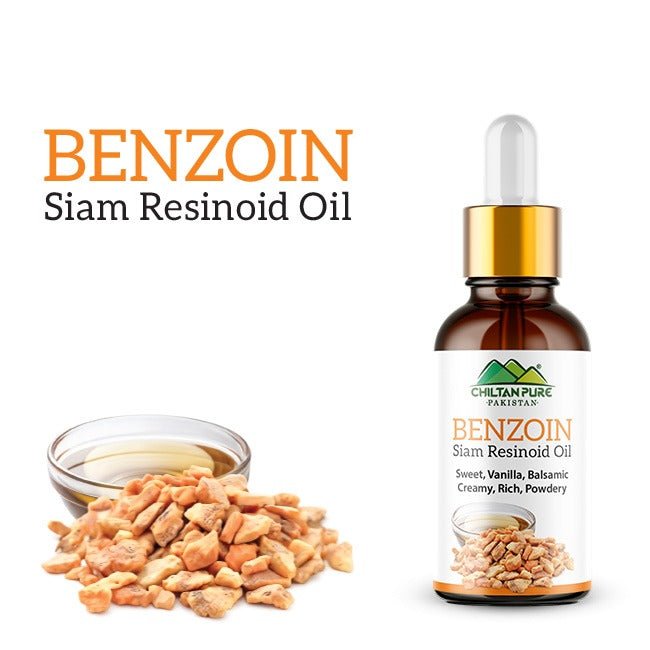
Benzoin Siam Resinoid Oil is derived from the pathological resin of Styrax tonkinensis, harvested by making incisions in the bark to stimulate resin flow. The practice dates back centuries in Southeast Asia, where benzoin was traded as incense, medicine, and perfume material along the ancient spice routes. Siam benzoin, sourced primarily from Laos and Vietnam, is considered finer and sweeter than its Sumatran counterpart, with higher free vanillin content and a more refined, less smoky character. It has been used in Catholic incense traditions, Ayurvedic preparations, and classical European perfumery since the medieval period.
What makes Benzoin Siam Resinoid Oil exceptional is its natural complexity. Unlike synthetic vanillin or isolated benzoates, the resinoid carries the full chemical matrix of the original gum — benzoic acid, benzyl benzoate, benzyl cinnamate, coniferyl benzoate, and free vanillin — all working together to create a depth that no single synthetic ingredient can replicate. It functions simultaneously as a scent material and a fixative, anchoring volatile top notes while contributing its own warm, balsamic sweetness to the composition. In attar and mukhallat traditions, it has long been used as a base carrier of emotional warmth and spiritual resonance.
Natural resinoid extracted from Styrax tonkinensis gum — one of the most valued balsamic base materials in classical perfumery
Rich in free vanillin, benzoic acid, and coniferyl benzoate — delivers genuine sweetness without synthetic musk additions
Outstanding fixative — extends the longevity of top and heart notes significantly when used as a base anchor
Essential in oriental, chypre, and incense-type compositions — cornerstone of traditional attar and mukhallat blending
Excellent performance in candles, incense sticks, and reed diffusers — superior hot and cold throw
Blends seamlessly with musks, woods, florals, and spices — one of the most versatile resinoids in any palette
Natural origin material — suitable for natural and near-natural fragrance formulation where synthetic alternatives are avoided
Benzoin Siam Resinoid Oil is a foundational base note in oriental, chypre, fougère, and amber-family perfumes. It anchors compositions with balsamic warmth while contributing genuine natural complexity. Particularly effective in EDP and parfum concentrations where its full character has room to develop.
One of the most important natural fixatives in traditional attar and mukhallat formulation. Its resinous, incense-laced sweetness pairs perfectly with oud, rose, sandalwood, and musk — a cornerstone of South Asian and Middle Eastern fragrance traditions.
Exceptional performance in candles, reed diffusers, and incense sticks. Benzoin resinoid delivers strong hot throw in wax and excellent cold diffusion in reeds. Its natural incense quality makes it ideal for meditation, prayer, and luxury home ambiance products.
Usable at low rates in soaps and body washes as a background note, though its dark colour can affect product appearance. IFRA restrictions and sensitization potential limit usage rates in leave-on products such as lotions and creams. Careful formulation required.
Limited use in rinse-off cosmetics at regulated concentrations. Not recommended for leave-on facial products at standard fragrance rates. IFRA guidelines must be followed strictly. Always perform stability and sensitization assessment before inclusion.
Thanks for subscribing!
This email has been registered!